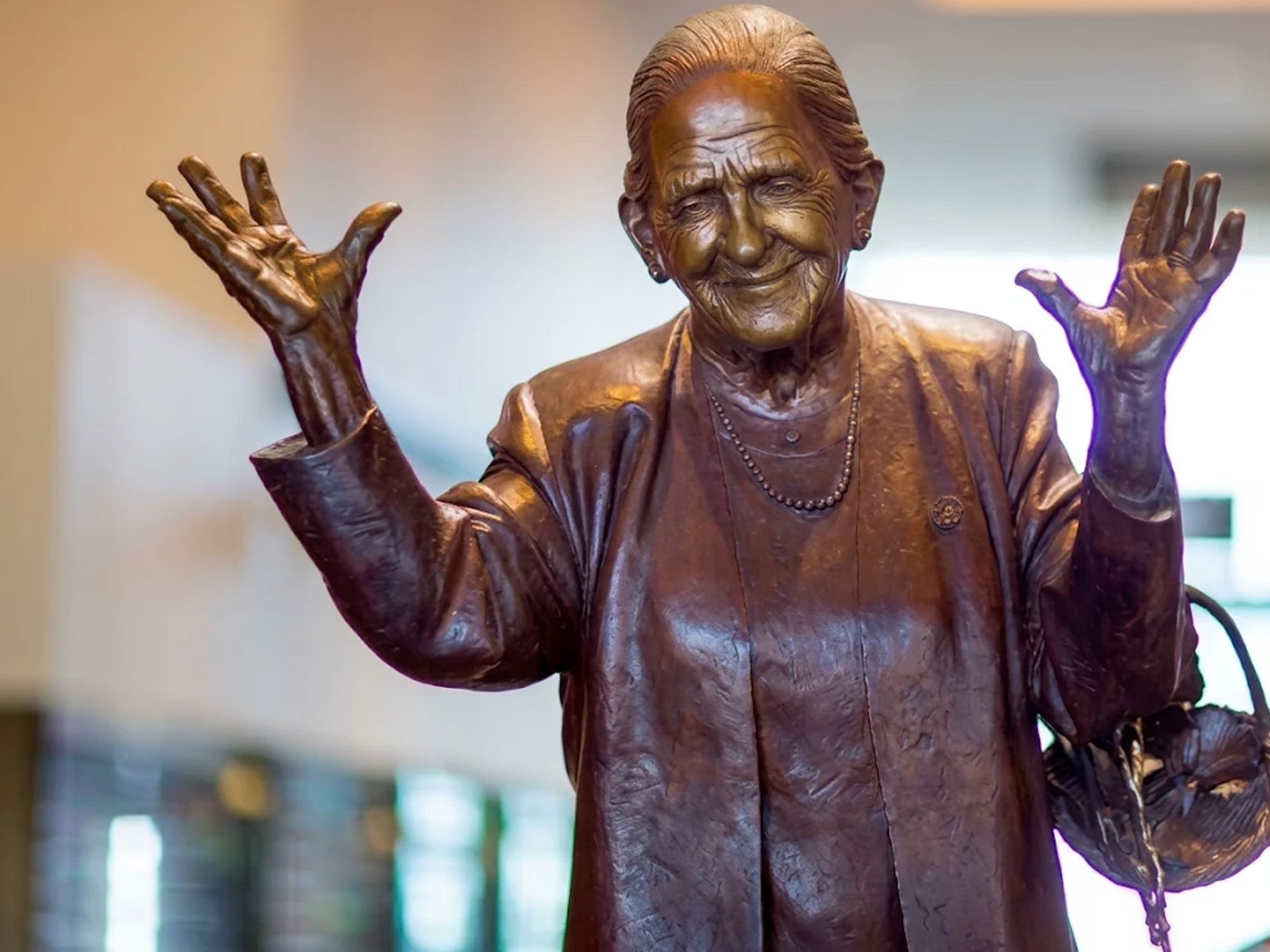

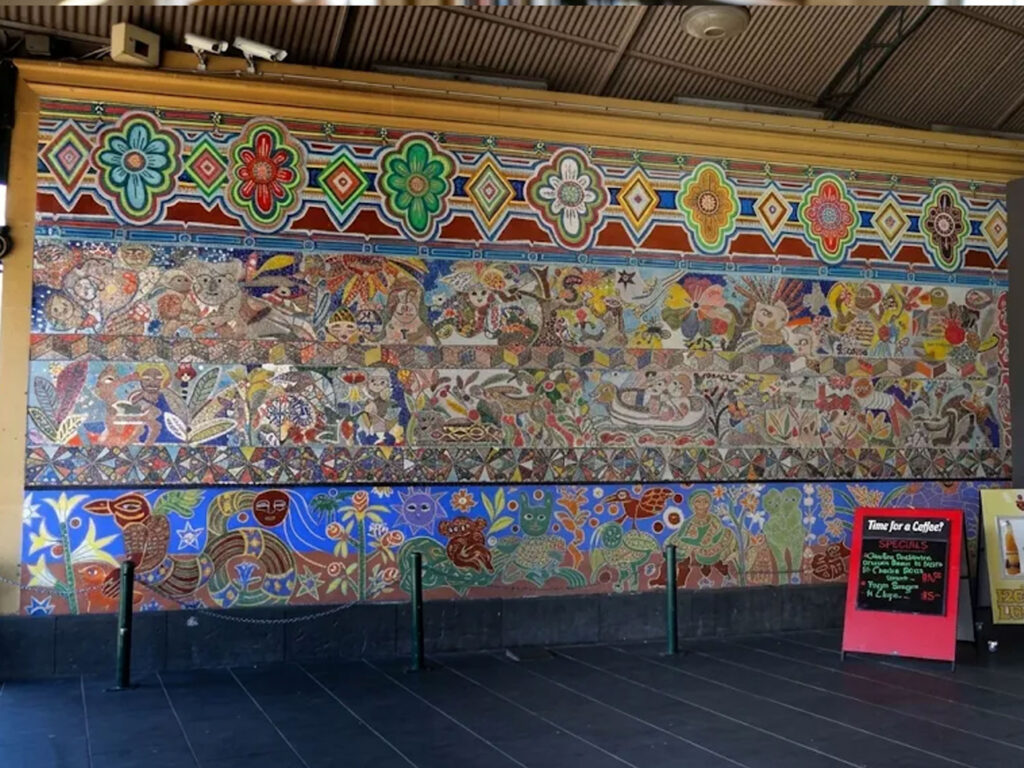
Along the sunlit pathways and landmark walls of St Kilda, wide-eyed angels, joyful serpents and bright botanical motifs still watch over passers-by with unmistakable warmth. These signature figures belong to Mirka Mora, the French-born painter, sculptor, mosaicist and doll-maker whose exuberant imagination helped transform post-war Melbourne and found its spiritual home beside Port Phillip Bay.
Over a career spanning nearly seven decades, Mirka Mora became one of Australia’s most beloved cultural figures. Yet while her works hang in major national institutions, her deepest creative bond was forged on the streets, tram routes and cafés of St Kilda, where art was never locked behind velvet ropes, but shared freely with neighbours, children and strangers alike.
From Wartime Paris to Melbourne’s Bayside
Born Mirka Madeleine Zelik in Paris in 1928 to a Lithuanian-Jewish father and a Romanian-Jewish mother, her early life was shaped by the upheaval of the Second World War. Surviving the occupation of France as a teenager, she married fellow survivor Georges Mora in 1947, and the young couple migrated to Melbourne in 1951 in search of peace and creative renewal.
Throughout the 1950s and 1960s, their city studio and hospitality ventures became the beating heart of Melbourne’s modernist renaissance, nurturing friendships with painters, writers and architects who were redefining Australian visual culture. By the mid-1960s, the family’s creative orbit shifted south toward the sea with the opening of the Tolarno Hotel and bistro on Fitzroy Street in St Kilda.
In St Kilda’s eclectic mix of European migrants, boarding-house poets, musicians and sea air, Mirka Mora discovered an environment that matched her own fearless individuality. Even after moving into her iconic Richmond studio later in life, she remained intimately tied to the bayside suburb, returning constantly to work, socialise and create public art.
Art Woven into Everyday St Kilda
Rather than treating art as a rarefied pursuit reserved for gallery openings, Mirka Mora believed creativity belonged on dining room walls, tram exteriors and beachfront pavements. Her generosity as a collaborator and public artist left an enduring visual trail across St Kilda that continues to delight new generations.
- The Tolarno murals: Inside the Fitzroy Street dining room of Tolarno Bistro, her original hand-painted murals remain intact, enveloping diners in her fantastical world of floating figures, birds and mythological creatures.
- St Kilda Town Hall mosaics: Working alongside community participants and young people, she created vibrant mosaic installations at St Kilda Town Hall, turning civic architecture into a joyful celebration of collective imagination.
- The Art Tram legacy: In 1986, she transformed a Melbourne W-class tram into a moving gallery of bright figures and patterns, running along the iconic St Kilda line and bringing playful colour to daily commuters.
Her distinctive visual language drew from European folk art, classical mythology, Jewish storytelling and her own dreamlike intuition. With bright primary colours, expressive eyes and tender humour, her works carried a quiet resilience, offering beauty and human warmth in a world that had once shown her the harshness of conflict.
A Generous Mentor and Beloved Neighbour
Beyond her canvases and ceramics, Mirka Mora was celebrated across St Kilda for her infectious enthusiasm and open-hearted encouragement of emerging artists. Whether teaching mosaic workshops to local schoolchildren, sketching on café napkins or conversing in her lilting French-Australian accent along Acland Street, she treated every encounter as an occasion for wonder.
Following her passing in 2018 at the age of ninety, the bayside community rallied to ensure her creative spirit remained alive in the suburb she loved. In 2021, the Jewish Museum of Australia in St Kilda acquired the contents of her studio through the support of the City of Port Phillip and philanthropic donors, preserving her brushes, sketchbooks, soft sculptures and personal archives for public exhibition.
Today, visitors wandering between Fitzroy Street, Alma Road and the foreshore encounter her legacy at every turn. Through her fearless use of colour, her devotion to community participation and her belief that joy itself is a vital artistic act, Mirka Mora gave St Kilda more than memorable artworks; she helped define the warm, bohemian heart of Melbourne’s bayside.