
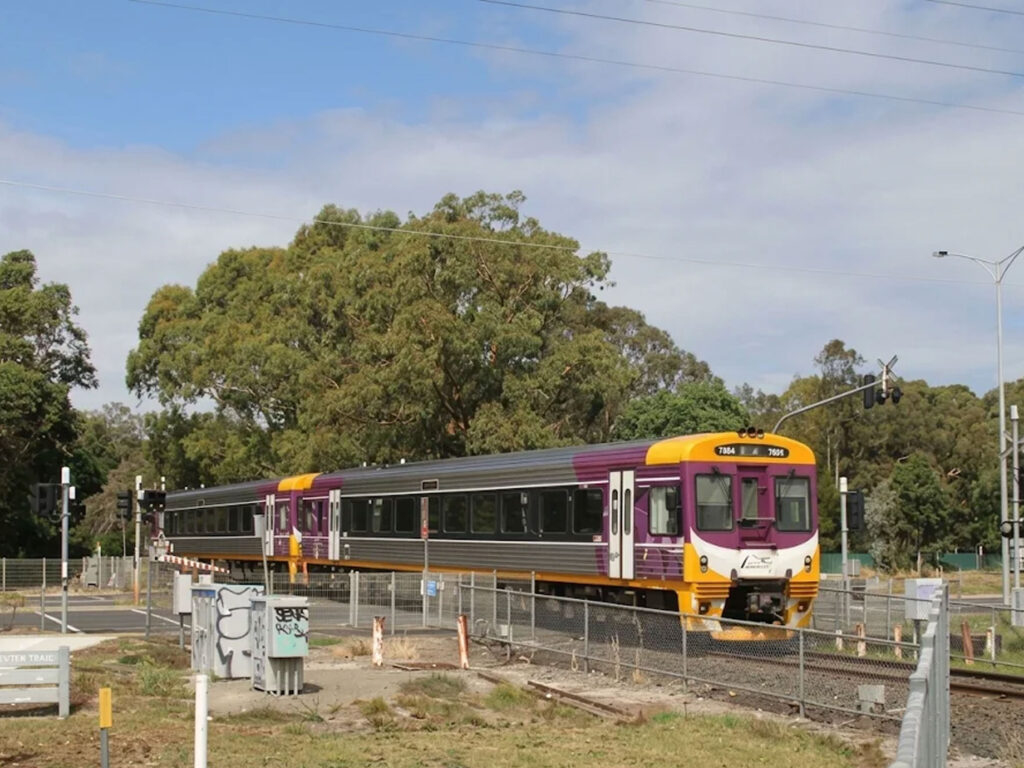
Running north to south through the centre of Somerville, the single-track steel corridor of the Stony Point railway line divides the township into two distinct halves while quietly binding its past to its present. Every day, diesel trains rumble past Station Street and Eramosa Road, carrying students, commuters and day-trippers between Frankston and the waters of Western Port.
Yet this modest regional rail link represents far more than suburban transit. When the line first opened in 1889, it rewired the geography, economy and social rhythm of Somerville, turning scattered clearings and struggling farmsteads into one of the Mornington Peninsula’s most productive agricultural hubs.
Breaking the Isolation of Nineteenth-Century Bushland
Prior to the late 1880s, reaching Melbourne from the interior of the northern Mornington Peninsula required slow, arduous journeys along unsealed tracks vulnerable to winter mud and summer dust. Settlers who had taken up land around Somerville during the 1860s and 1870s faced a persistent obstacle: fertile soil and a temperate climate meant little if perishable produce could not reach city markets in good condition.
The construction of the railway extension south from Frankston toward the naval and port facilities at Crib Point and Stony Point changed that equation overnight. When trains began running through Somerville in September 1889, travel times to Melbourne dropped from an exhausting day-long haul by horse-drawn wagon to a predictable rail journey of just a few hours.
Almost immediately, the railway station became the natural focal point of civic development. Where early settlement had clustered loosely around road junctions, new shops, a post office, churches and community halls gradually gravitated toward the tracks, establishing the town layout that remains recognisable today.
Fueling an Orchard Boom Across Victoria
With reliable rail freight now available at the centre of town, Somerville’s horticultural potential expanded rapidly. Cool-storage sheds and packing houses were constructed directly beside the railway sidings, allowing growers to load crates of apples, pears and stone fruit straight onto goods wagons bound for Melbourne’s wholesale markets and interstate shipping wharves.
Just as importantly, the line carried nursery stock outward across the country. Bare-rooted fruit trees raised in Somerville’s sandy loam soils travelled by rail to fledgling orchard districts throughout Victoria and beyond, earning the township a reputation far larger than its modest population suggested.
Each autumn, the railway also brought visitors in the opposite direction. The annual Somerville horticultural and agricultural show drew crowds down from Melbourne on special excursion trains, turning the station platform into a bustling gateway of rural pride and regional exchange.
Resilience Through Changing Eras
Like many regional rail corridors across Victoria, the Stony Point line experienced periods of uncertainty during the twentieth century as private car ownership rose and road freight replaced rail goods traffic. By the 1980s, shifting transport priorities led to temporary service suspensions and debate over whether outer-peninsula rail links remained viable.
Community advocacy and recognition of the corridor’s strategic value to Western Port ensured the line’s survival. Reopened to passenger services in 1984, the railway adapted from an agricultural freight artery into an essential commuter lifeline serving a rapidly growing residential population.
As Melbourne’s south-eastern growth corridor pushed steadily down the peninsula, the presence of an established railway station shaped how Somerville expanded. Housing estates radiated outward from the historic rail spine, while nearby reserves and community facilities grew alongside the corridor to support a new generation of families.
A Living Spine in Modern Somerville
Today, the physical imprint of the railway continues to guide how Somerville moves and connects. Alongside the tracks, sections of the broader Peninsula Trail shared-user path network are transforming the historic rail reserve into an active corridor for walkers and cyclists linking Somerville with neighbouring communities.
Standing on the platform at Somerville Station or waiting at the level crossing as a train passes through town offers a tangible reminder of how infrastructure shapes human settlement. Long after the wooden fruit crates and steam locomotives vanished from the sidings, the corridor laid down in 1889 remains the enduring thread connecting Somerville’s rural origins with its contemporary suburban rhythm.