
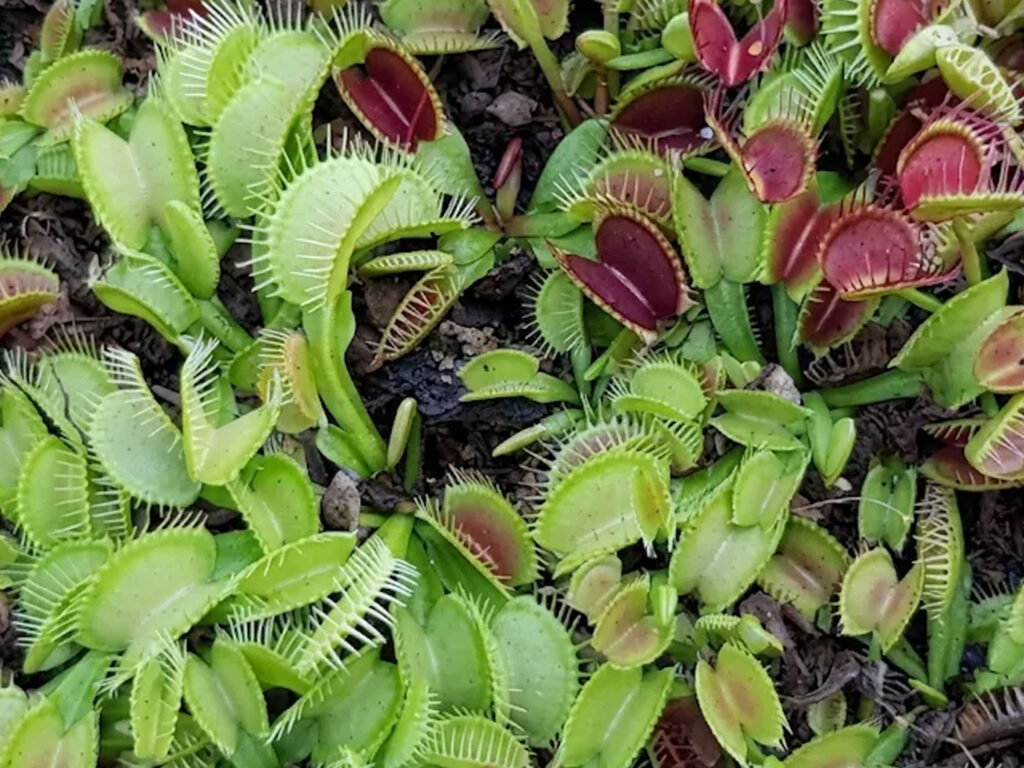
Behind the unassuming rural frontage of 103 Dandenong-Hastings Road in Somerville sits one of Australia’s most unusual horticultural operations. Rather than rows of ornamental roses or native shrubs, the climate-controlled growing houses at Triffid Park are filled with thousands of botanical predators. Here, glossy tropical pitcher plants hang beside clusters of dew-covered sundews and snapping Venus flytraps, forming a living collection that draws plant enthusiasts from across the country.
For everyday gardeners across Melbourne and the Mornington Peninsula, carnivorous plants often carry a reputation for being temperamental novelties. In reality, once their basic environmental preferences are understood, these evolutionary marvels are remarkably rewarding to cultivate at home.
From Market Garden Roots to Botanical Specialists
The story of Triffid Park reflects the broader agricultural heritage of south-eastern Melbourne. The nursery’s origins date back to 1977, when founder Colin Clayton, raised on a family market garden in Dingley, established Dingley Fern Market. What started with ferns and water plants gradually expanded into a fascination with insectivorous species.
In 2007, Jason Smith and Donna Smith took the reins of the business, relocating the entire operation from its original suburban site to a 15-acre property in Somerville. The move allowed them to construct a modern, purpose-built facility tailored to the distinct needs of different carnivorous genera. Separate growing zones fitted with rolling benches, thermal screens, foggers and temperature controls replicate everything from humid tropical lowlands to cool temperate bogs.
Operating primarily as a wholesale supplier to garden centres and an accredited mail-order nursery shipping bare-rooted plants across most Australian states, the Somerville site remains a working agricultural property rather than a traditional walk-in retail shop. Yet its influence reaches directly into suburban living rooms, courtyards and balconies throughout Victoria.
Why Carnivorous Plants Suit Modern Melbourne Homes
As residential blocks shrink and apartment living becomes more common across Greater Melbourne, home gardeners increasingly look for compact plants that offer visual drama without demanding sprawling garden beds. Carnivorous species fit neatly into this shift. Many varieties thrive in small pots on sunny windowsills, sheltered balconies or inside glass terrariums, acting as living sculptures that spark immediate conversation.
Beyond their striking shapes and colours, these plants offer a quiet lesson in natural adaptation. Carnivorous flora evolved in nutrient-poor, boggy soils where essential minerals like nitrogen and phosphorus were scarce. To compensate, they developed specialised leaves capable of luring, trapping and digesting insects. Observing a Venus flytrap trigger its sensitive hairs or watching a Sarracenia pitcher catch summer flies brings an interactive element to indoor gardening that standard foliage plants rarely match.
Practical Essentials for Growing Carnivorous Plants at Home
Success with insect-eating plants comes down to mimicking their native wetland habitats rather than treating them like conventional houseplants. According to cultivation guidelines shared by Triffid Park, four simple habits make the difference between a struggling specimen and a thriving collection.
Choose the Right Potting Medium
Standard commercial potting mixes contain fertilisers and minerals that quickly burn the delicate root systems of carnivorous plants. Instead, growers rely on a nutrient-free blend of roughly 75 per cent sphagnum peat moss and 25 per cent perlite or propagating sand. Pre-soaking dry peat moss in a bucket of water before potting ensures the medium absorbs moisture evenly around the roots.
Keep Moisture Levels Consistent
Because most bog-dwelling species cannot tolerate drying out, the tray method works best during Melbourne’s warmer months. Placing pots in a shallow saucer of water keeps the growing medium consistently damp through spring, summer and autumn. Refreshing the water regularly prevents mineral build-up. Where tap water is heavily treated or high in dissolved salts, rainwater, distilled water or reverse-osmosis water keeps plants in peak condition.
Provide Abundant Sunlight
Contrary to the assumption that unusual indoor plants prefer deep shade, genera such as Sarracenia, Dionaea (Venus flytraps) and Utricularia thrive in bright conditions. A windowsill receiving strong morning sun in summer and direct afternoon light in winter provides the energy these plants need to produce vibrant pigmentation and healthy traps.
Respect Winter Dormancy
One of the most common mistakes new growers make is assuming a temperate pitcher plant or flytrap has died when its traps wither in cooler weather. Native to regions with distinct seasons, species like Sarracenia require six to eight weeks of winter dormancy triggered by shorter days and temperatures below 10 degrees Celsius. During this rest period, reducing standing water and trimming back spent foliage allows the rhizome to conserve energy for vigorous spring growth.
A Living Link to Somerville’s Horticultural Identity
Somerville has long balanced rural productivity with suburban growth, shaped by its history as an orchard district and its proximity to Western Port. Today, specialist nurseries across the area continue that tradition of skilled cultivation alongside newer residential estates.
While the glasshouses at Triffid Park operate behind closed gates for most of the year to maintain strict biosecurity and quarantine standards, the nursery’s work demonstrates how dedicated local growers can nurture curiosity far beyond their property line. For anyone looking to refresh a sunny windowsill or introduce an element of botanical wonder into daily life, these remarkable plants prove that some of the most captivating additions to a Melbourne home are also the most intriguing.