
While many inner-Melbourne retail precincts rely on sprawling shopping strips or multi-level complexes to attract foot traffic, Middle Park conducts almost its entire commercial life along a single, tree-lined block. Stretching between Canterbury Road and Richardson Street, Armstrong Street functions as an intact Victorian-era village hub where independent grocers, artisan bakers, cafes, and specialist boutiques form the backbone of the suburb’s local economy.
Surrounded by residential streets and bordered by Port Phillip Bay and Albert Park Lake, the strip benefits from a compact geographic footprint that keeps daily spending close to home. Rather than competing on volume or discount pricing, Armstrong Street businesses have built resilience around personal service, careful product curation, and deep familiarity with regular customers.
An Economic Model Built on Daily Necessities
At the heart of Armstrong Street’s commercial stability is a focus on everyday essentials delivered at an artisanal standard. In an era when major supermarket chains dominate metropolitan grocery spending, independent food retailers in Middle Park have carved out a durable niche by emphasising provenance, seasonal produce, and direct relationships with Victorian growers.
Established in 2009, Gum Tree Good Food exemplifies this neighbourhood-focused retail model. Operating out of its Armstrong Street shopfront, the business stocks fresh fruit and vegetables, organic wholefoods, delicatessen items, and house-prepared meals sourced largely from small-scale regional producers. By pairing everyday pantry staples with specialty ingredients, the store serves both quick weekday errands and weekend dinner preparation without requiring residents to leave the precinct.
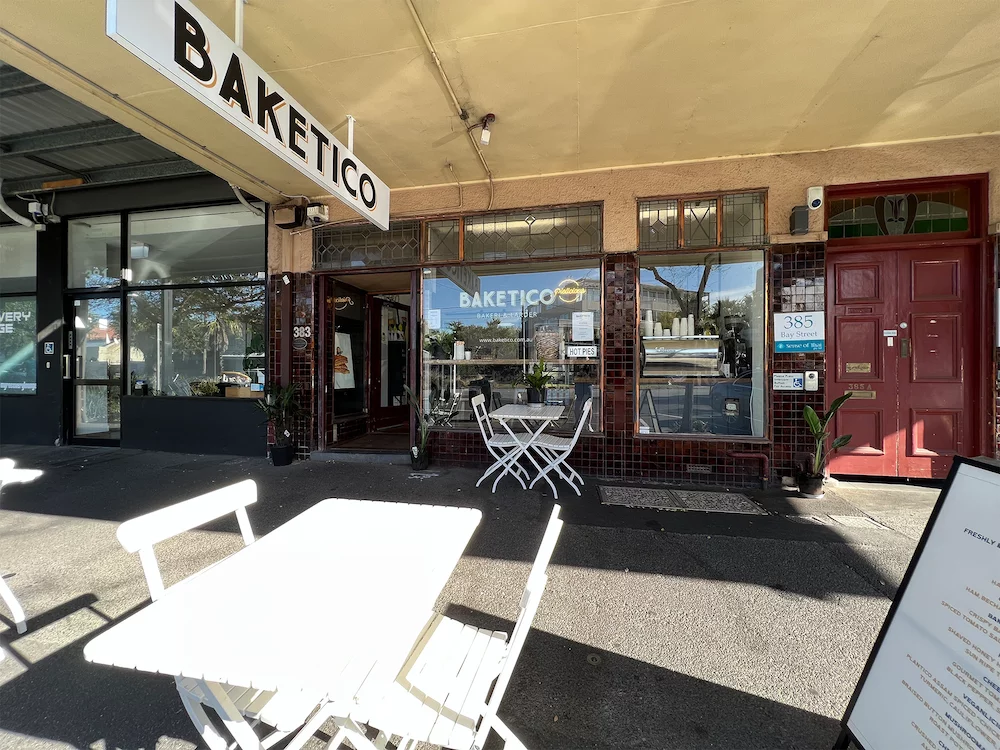
Just doors away, Neds Bake anchors the strip’s daily baking trade. Combining traditional European fermentation techniques with modern Australian cafe hospitality, the bakery produces sourdough loaves, viennoiserie, and savoury pastries on site from early morning. The steady rhythm of commuters picking up bread on their way to the nearby Route 96 light rail stop illustrates how integrated food production remains within the suburb’s daily routine.
Hospitality Anchors and Historic Cornerstones
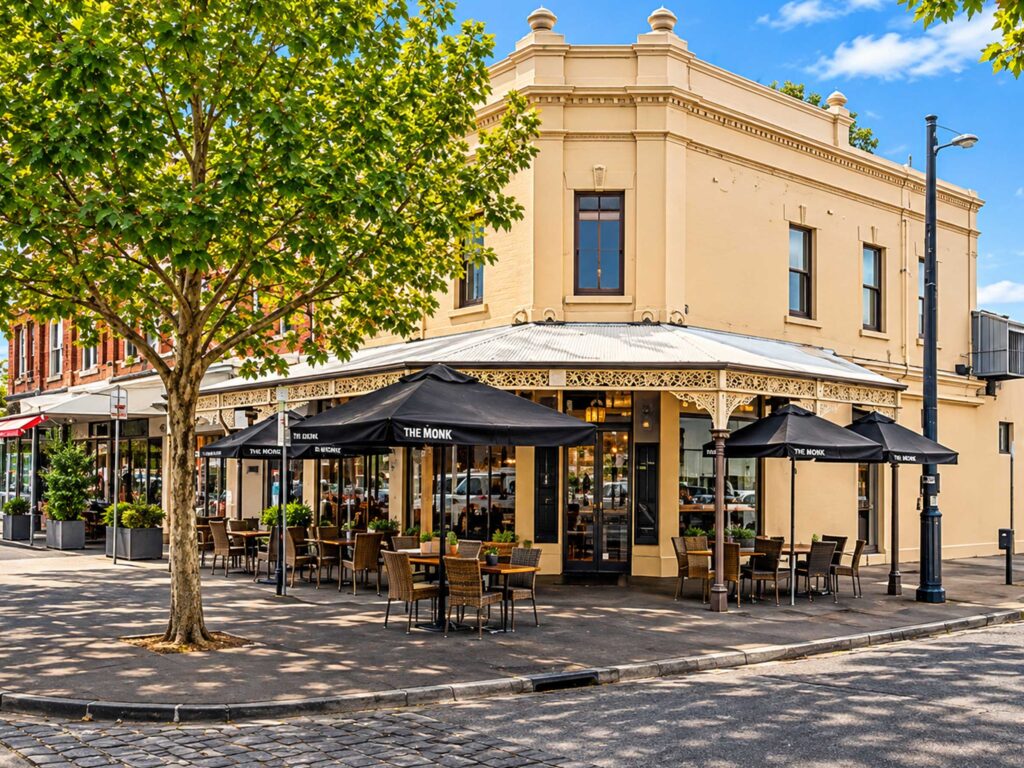
Commercial longevity in Middle Park is closely tied to the architectural heritage of its streetscape. Protected under heritage overlays administered by the City of Port Phillip, the strip retains its late-nineteenth-century shopfronts, verandas, and corner landmarks, giving local enterprises a distinctive sense of permanence.
Standing on the corner of Armstrong Street and Canterbury Road since 1889, the Middle Park Hotel remains one of the suburb’s most recognisable commercial institutions. Featuring restored Victorian ironwork and timber interiors, the venue bridges traditional public-house hospitality with contemporary dining and boutique accommodation, drawing both neighbourhood regulars and visitors arriving from across Melbourne.
Smaller hospitality operators reinforce that welcoming street-level energy throughout the day. Corner cafes such as Hector’s Corner and Jack the Geezer operate on high repeat patronage, where staff know customers by name and pavement tables turn the footpath into an informal meeting place. Across Canterbury Road, Mart 130 occupies the converted 1880s stationmaster’s residence beside the light rail line, demonstrating how adaptive reuse of historic transport infrastructure can sustain a thriving independent cafe business.
Specialist Retail and Personal Service
Beyond food and hospitality, Armstrong Street supports a curated mix of independent retail and service businesses that cater to the practical and aesthetic sensibilities of bayside residents. Unlike high-street strips dominated by national franchises, the precinct favours owner-operated stores where proprietors remain closely involved in buying and customer advice.
Long-standing fashion boutique Empress, which opened on Armstrong Street in 2012, reflects this consultative approach to retail, offering tailored wardrobe selections suited to local lifestyles. Nearby, The Village Store provides homewares, gifts, and everyday lifestyle goods chosen specifically for the neighbourhood demographic. Supporting services including hairdressers, pharmacies, florists, and wellness practitioners round out the strip, allowing residents to complete multiple personal errands within a two-minute walk.
Why Compact Scale Protects Local Enterprise
The physical containment of Armstrong Street creates natural advantages for small business owners. Because commercial zoning is limited and foot traffic is concentrated along one short block, neighbouring traders act less as direct competitors and more as complementary parts of a shared ecosystem. A morning coffee run naturally leads to a visit to the baker, grocer, or florist next door, generating steady cross-visitation throughout the week.
High walkability also shields local traders from fluctuations in commuter parking. With most customers arriving on foot, by bicycle, or via the Canterbury Road light rail corridor, businesses enjoy consistent seven-day trade supported by households within a few hundred metres of their front doors.
A Blueprint for Sustainable Neighbourhood Commerce
In a rapidly changing retail landscape, Middle Park’s commercial centre demonstrates that small-scale neighbourhood strips remain commercially viable when they align closely with community habits. By focusing on quality goods, adaptive heritage spaces, and genuine human connection, the independent enterprises of Armstrong Street continue to sustain both the local economy and the distinct village character of the suburb.